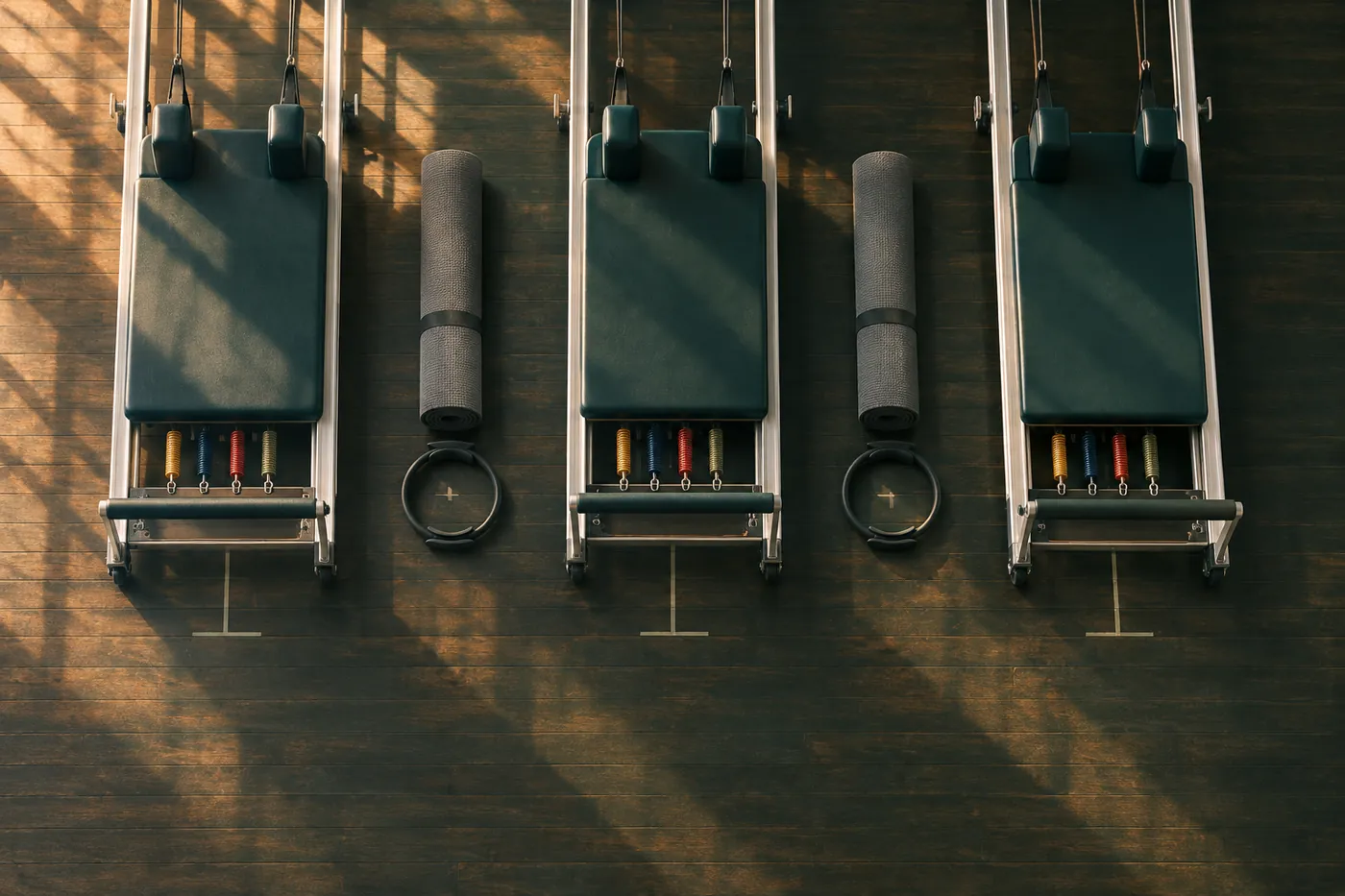
Along the rails
The formats the studio is being set up to run
A reformer class is sized by the floor, not by a booking system. One person works one machine, so the number of reformers in the room is the most a class can ever hold.
Nothing on this page is a timetable. Days, times and the size of each class will be published when they are real, and until then the formats are described as intent: what each one is for and how it runs. Where each one is planned in the week is on the planned week.
Small groups on the reformer
One person, one reformer, one instructor calling the changes.
The core of the studio. A small group works on the reformers together, one person to each machine, with one instructor setting the pace and calling the changes between blocks. The class moves through a planned sequence; between blocks the springs are changed, the footbar is moved or a box is added, and the instructor checks every machine before the next block starts.
Mixed-level classes are for people who have finished the foundation block or who already know the apparatus. Level is a matter of the plan and the set-up, not of pushing harder.
The foundation block
A short closed course for newcomers, run before anyone joins a mixed class. The same few people meet for a set number of sessions, so the instructor can teach the machine as well as the class: how the carriage is controlled at both ends of its travel, what each spring setting feels like, and how a transition is made without fuss.
How many sessions the block has, and how often it meets, is the studio’s own convention. It will be stated on the timetable rather than borrowed from anyone else.
Orientation, before any class
One short session on the machine itself, in the same visit as the welcome conversation: together they are the intro session, asked for in the windows kept for it. It covers four things, in this order, and nothing else.
- Getting on and off the carriage, and where hands and feet go while you do
- Hooking and unhooking springs, and reading their colours on that machine
- Footbar positions, the headrest, shoulder rests, straps and loops
- Stopping the carriage under control, from anywhere along the rails
Mat classes
The same room with the reformers pushed to their marks and mats laid out between them. Mat classes can take more people than the reformer classes, because nobody is waiting for a machine.
For many people they are a first contact with the studio before the apparatus, and for others a second format alongside it. The props are small and few:
- A mat each
- The flexible ring
- A small ball
- A resistance band
Privates and duets
Private
One person with one instructor for the whole session. Privates use the full range of apparatus the studio holds rather than the reformer alone, and suit anyone who would rather learn the machine without a group around them.
Duet
Two people sharing an instructor and a plan: friends, colleagues, or two people at the same stage. The instructor sets both machines and moves between them.
Other ways onto the floor
Rolling starts
A model under consideration instead of fixed class times: one or two people begin every half hour, and no more than four are on the floor at once.
Closed groups
A whole session booked by one group of people who want to come together.
Visiting instructors
Studio hours for qualified instructors who teach their own clients and bring their own qualifications and insurance.
Mark the ones you would come to on the founding list; questions about any of them can go to classes@extremepilates.live.